Best Blacksmithing Starter Kits for UK Beginners (Forge + Anvil + Tools)
If you're thinking about taking up blacksmithing at home, the cost of entry can feel daunting. A proper forge, anvil, hammer, and tongs don't come cheap individually, and buying them separately often means overpaying or ending up with mismatched tools that don't work well together. The good news: several UK retailers now offer curated starter bundles that bundle the essentials at three distinct price points, each designed for a different commitment level and space.
This guide walks you through what actually matters in a starter kit, then breaks down three realistic options from around £300 to £1,000. None of these are toy kits—they're built for real work and real learning.
What to Look for in a Blacksmithing Starter Kit
Before comparing kits, understand what each component does and why it matters for beginners.
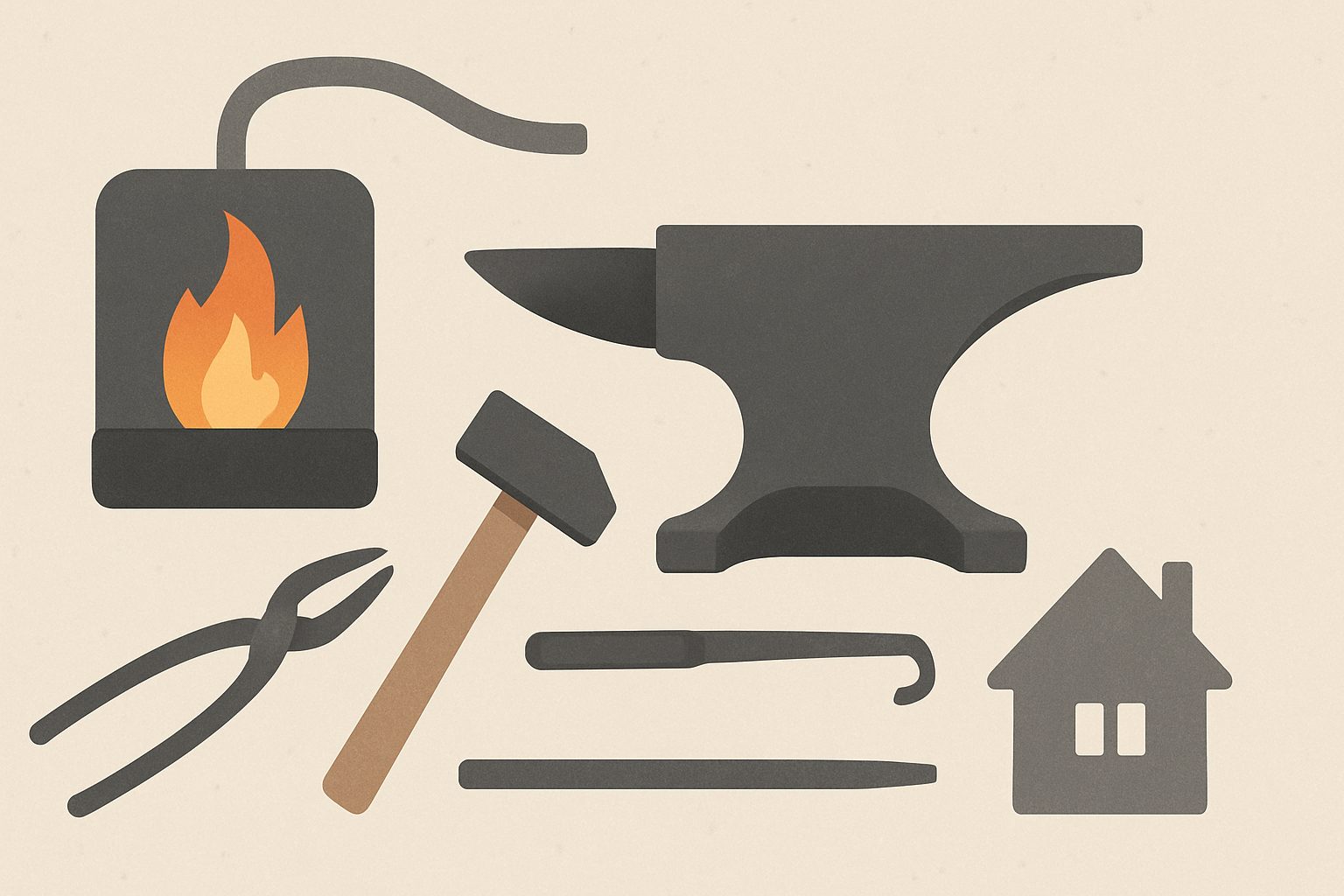
The Forge is where you heat metal. For home blacksmiths, a coal-fired forge or small propane forge works best. Coal is cheaper and traditional; propane is cleaner and easier to control. Either way, the forge needs to reach at least 1,200°C to work mild steel effectively.
The Anvil is your work surface. Weight matters—a heavier anvil (25kg+) absorbs hammer blows without bouncing around, making forging less exhausting and more precise. Lighter anvils (under 15kg) are portable but frustrating to use for serious work. New cast-steel anvils are fine for beginners; the price difference between wrought iron and cast steel is huge, but both work.
The Hammer should weigh 1–2kg for general forging. Too light, and you'll tire yourself out; too heavy, and you'll lose control. A cross-peen or ball-peen hammer is standard.
Tongs let you safely hold hot metal without burning your hands. You'll need at least two pairs—one for general holding, another for bending or scrollwork. Cheap tongs are miserable; better tongs grip reliably and reduce hand strain.
Safety Gear (leather apron, eye protection, sturdy shoes) isn't always bundled but should be budgeted for alongside any kit.
Budget Tier 1: Around £300
At this price point, you're looking at a minimal setup that covers the absolute essentials. A typical bundle includes a small coal-fired forge (often a DIY brake-drum design or simple square hearth), a 10–15kg cast-steel anvil, a 1.5kg cross-peen hammer, and a single pair of tongs. Some kits swap the coal forge for a small propane torch forge instead.
What works here: This tier is genuine and functional. A 15kg anvil will let you learn proper technique—striking, bending, and drawing down—on flat stock and simple scrolls. The forge will reach working temperature reliably.
The trade-offs: The anvil is light enough to shift if you hit it off-centre. A single pair of tongs limits your work types. The coal forge requires sourcing fuel locally and managing ash; propane versions are tidier but consume more fuel. There's little margin for learning mistakes or ambitious projects.
Best for: Absolute beginners testing commitment, those with tight budgets or very limited space, hobbyists planning small-scale work (decorative items, horseshoes, simple tools).
Budget Tier 2: Around £600
Step up, and you get a noticeably better experience. A £600 bundle typically includes a proper forge (often a quality propane burner or a dedicated coal hearth), a 30–35kg cast-steel or wrought-iron anvil, a 1.75kg hammer, two pairs of tongs, a hardy tool set (basic shaping tools that fit in the anvil's hardy hole), and sometimes a nail header or simple swage block.
What works here: The heavier anvil is transformative—it sits solid, gives better feedback, and handles full-day workshops without complaint. Two pairs of tongs and hardy tools expand what you can actually make. The forge is often more refined, with better heat control. You're no longer learning on a bare minimum.
The trade-offs: You need proper workspace—a sturdy bench or stand to mount the anvil, good ventilation for the forge. Propane kits require regular cylinder changes. Space is a real constraint if your workshop is cramped.
Best for: Committed beginners planning regular practice, those who've done a course or watched serious tutorials, hobbyists aiming beyond decoration (functional knives, tools, architectural ironwork).
Budget Tier 3: Around £1,000
At this level, you're in semi-professional territory. A £1,000 kit might include a dual-burner propane forge, a 40–50kg anvil (possibly wrought iron), quality hammers in multiple weights, a comprehensive tongs set (4–6 pairs for different tasks), hardy tools, a swage block, and sometimes a leg vise or stand. Some bundles throw in anvil stands, tool racks, and safety gear.
What works here: Everything is scaled for serious, sustained work. A 40kg+ anvil barely moves under hammer blows; multiple tongs and tools mean you're not constantly swapping or improvising. Propane forges with twin burners heat larger stock faster. The entire kit feels professional-grade because it is.
The trade-offs: Cost is high. Space and ventilation demands are real. You're over-equipped if you only plan occasional projects. These kits assume you're committed enough to invest in proper workshop infrastructure.
Best for: Serious hobbyists, those with prior metalworking experience, anyone planning to sell finished work eventually, makers with good workshop space.
Safety and What's Not Included
All three tiers assume you'll add leather aprons, heat-resistant gloves, eye protection, and sturdy shoes. Budget another £40–80 for decent safety gear—it's not optional.
You'll also need fuel (coal or propane), a proper work surface or stand, decent lighting, and ideally some ventilation. None of these are kit-specific, but they're real costs.
Which Tier for You?
If you've never forged before, start with honesty: do you have a dedicated workspace? A workshop is not a luxury here—it's a practical requirement. Can you commit to regular practice—say, monthly or weekly sessions for the next six months?
The £300 kit works if space is genuinely tight and you're genuinely uncertain. The £600 kit is the sweet spot for most home blacksmiths: enough quality to improve your work without wasting money on unused features.
The £1,000 tier is an investment, not an experiment. It makes sense if you've already done a course, worked at a forge elsewhere, and know you'll use it.
Whichever you choose, you're buying real tools designed for real work. Blacksmithing has been taught this way for centuries—the simplicity of the kit won't limit you. Your commitment to practice will.
More options
- Devil Forge Propane Gas Forge (Single & Double Burner) (Amazon UK)
- Blacksmithing Anvil (Cast Steel, 55–110 lb) (Amazon UK)
- Ceramic Fibre Blanket Refractory Wool (Kaowool 2600) (Amazon UK)
- Blacksmithing Tongs and Hammer Starter Set (Amazon UK)
- Leather Blacksmith Apron and Welding Gloves PPE Bundle (Amazon UK)